

 English
 Español
 Italiano
 Français
Can pruning help us cut costs in our olive grove? The answer is yes.
Key factors to minimize costs
Let's examine the two key factors that can help us save costs in the long run for our olive grove. In a context where olive grove acreage is rapidly increasing each year, not controlling production costs can pose a problem for those farmers who do not economically optimize their crops.
To be competitive in today's market, it's crucial to minimize costs in every aspect of cultivation. And one of the most economically underestimated tasks is pruning. However, a good pruning strategy can have a significant positive impact on production and resource optimization, helping to reduce expenses.
Benefits of good pruning
Despite often being overlooked, pruning offers multiple benefits, including:
- Improved fruit development: By allowing light and air to enter, it promotes even ripening throughout the plant.
- Reduced pests and diseases: Removing affected branches reduces the spread of plant health issues.
- Easier harvesting: A well-pruned olive grove improves machinery access, optimizing the harvest process.
To achieve these benefits, we need to understand and apply two fundamental principles: the leaf/wood ratio and the leaf/root ratio.
1. Leaf/Wood ratio (L/W)
This concept refers to the balance between the number of leaves on the olive tree and the woody mass (trunk and branches). An olive tree with a balanced ratio will have a trunk proportionate to its canopy, while a tree with too much wood and too few leaves will have low photosynthetic activity and reduced production.
How does it impact cost reduction?
- An olive tree with a good Height to Mass (H/M) ratio focuses its resources on fruit production instead of thickening inefficient branches.
- An excess of wood reduces photosynthetic efficiency, thereby decreasing the yield.
- Moreover, a lack of leaf mass leaves the trunk exposed, increasing the risk of sun damage, harm, and weakening of the tree.
- Alternate bearing, where harvest occurs every other year, is also more likely if a good balance is not maintained.
2. Leaf to Root Ratio (L/R)
This factor measures the proportionality between the leaf mass and the root system of the olive tree. A proper balance allows the tree to absorb enough nutrients and water for its development.
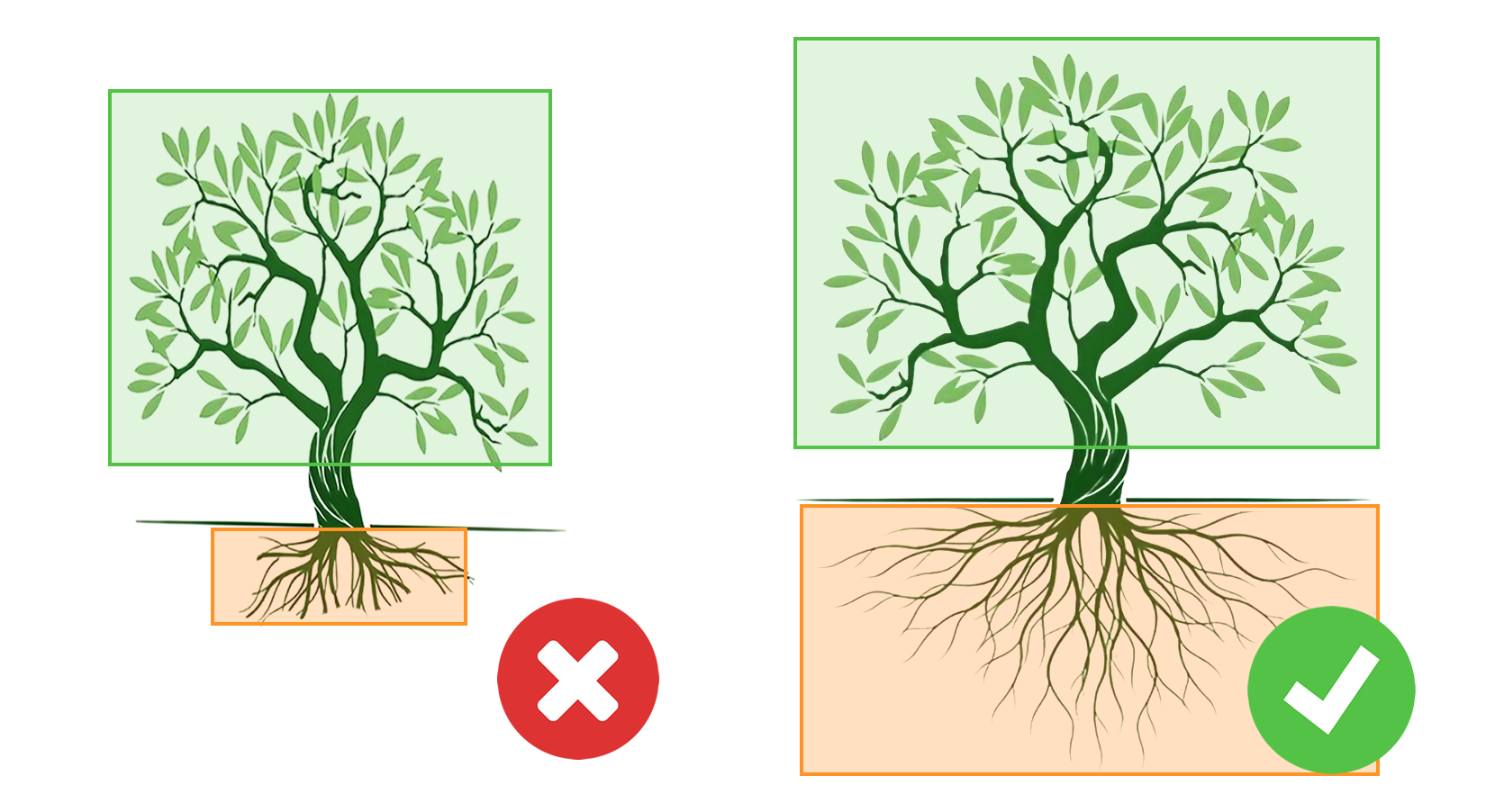
How does it help us cut costs?
- If the roots are inadequate, the olive tree won't be able to take up the necessary nutrients and water, leading to chlorosis (yellowing leaves) and water stress.
- A strong root system enhances the olive tree's drought resistance and its ability to withstand adverse weather conditions.
- An imbalance with too much canopy and insufficient roots also increases the risk of the tree toppling in strong winds.
- Maintaining a good canopy-to-root ratio reduces the need for future pruning and tree shaking, thereby lowering labor costs.
Examples of pruning analyzed
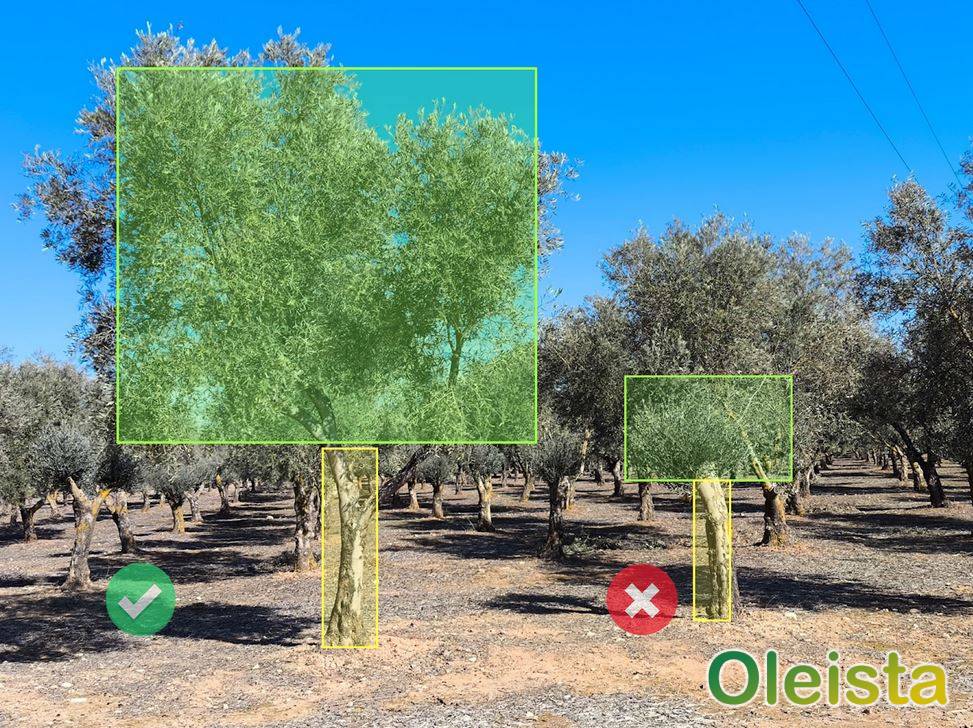
Example 1: Balanced pruning
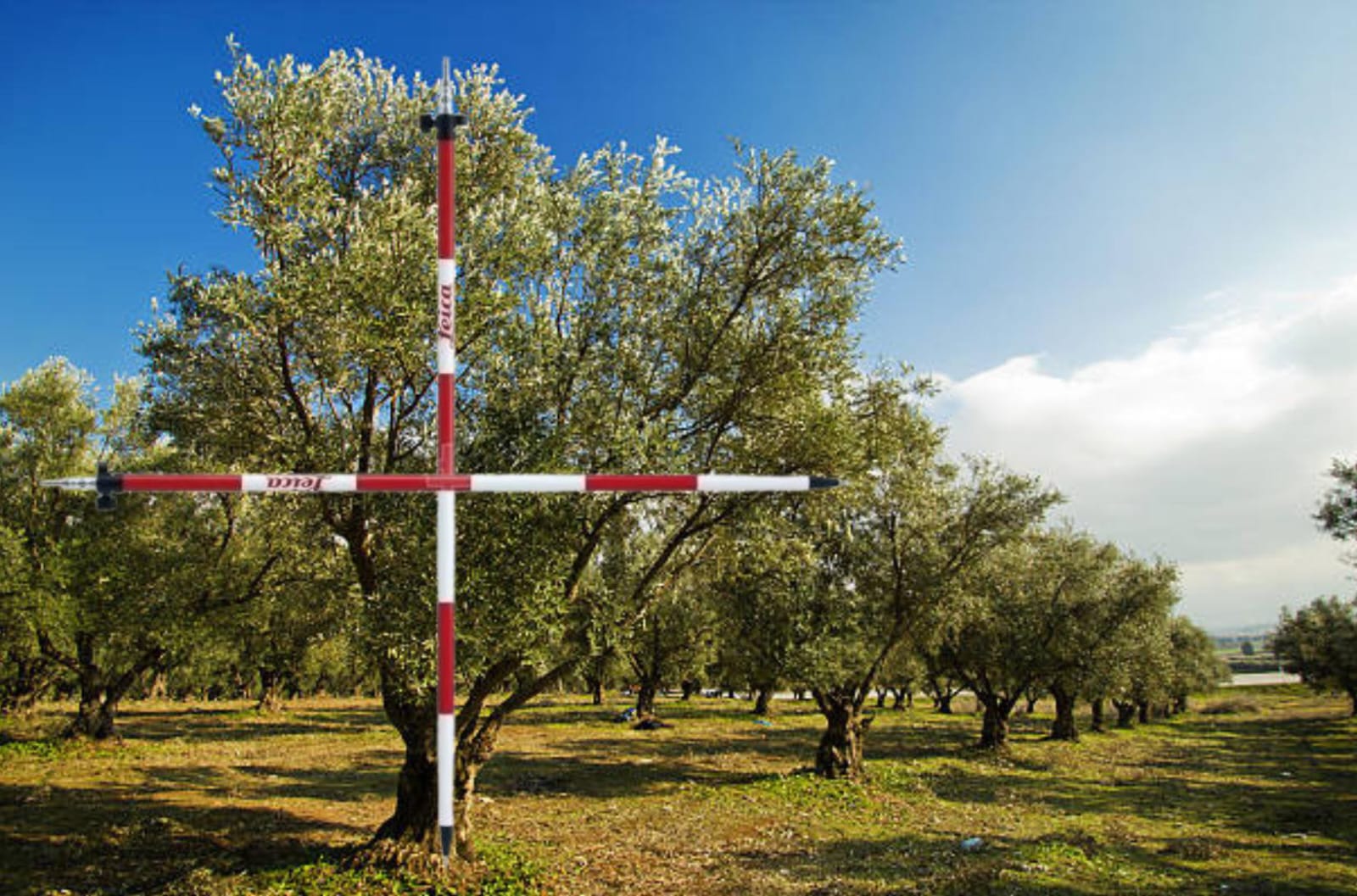
- In this case, the leaf-to-wood and leaf-to-root ratios are well balanced. The olive tree has a canopy that is appropriately proportioned in relation to its roots and trunk, which maximizes productive efficiency and makes harvesting easier.
- In this instance, the olive grove could have been pruned down a bit more in height, but it was left as is due to the method of harvesting that will be used.
Example 2: Unbalanced Pruning H/M (excess wood)
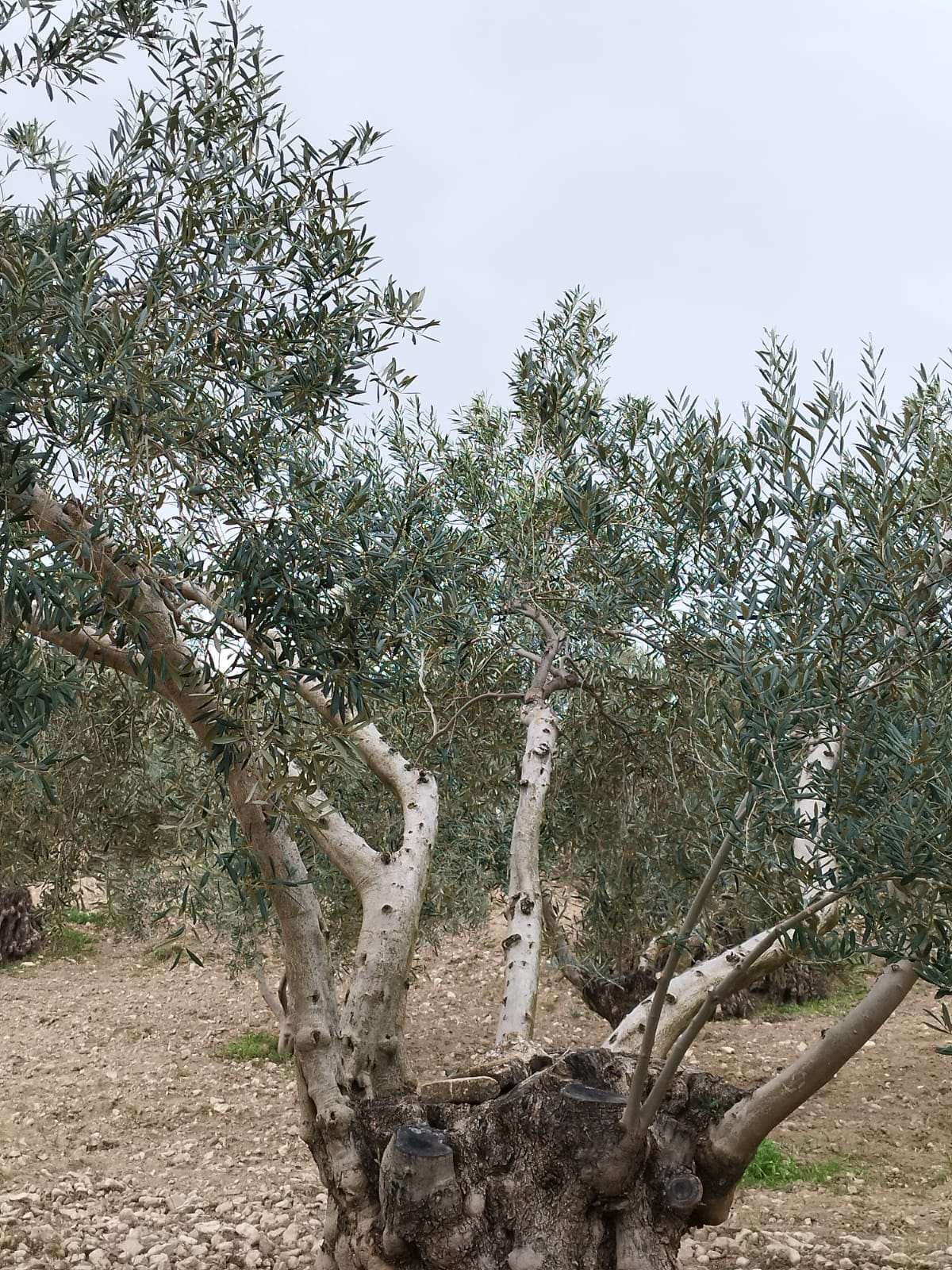
In this case, it's clear that the sizes of the branches and leaves don't match up with the wood of the trunk in any of the instances. In such situations, where the volume of wood is significantly greater than the leaf volume, we're faced with five main negative consequences, which are as follows:
- The branches are too thick relative to the number of leaves.
- Insufficient photosynthetic activity, which limits fruit growth.
- Smaller harvests. Resources are wasted on woody structures instead of production.
- It induces alternate bearing, meaning we have to harvest every other year.
- Greater exposure of the trunk to sunlight and damage when temperatures are high.
Example 3: Unbalanced pruning H/R (too much canopy and insufficient roots)
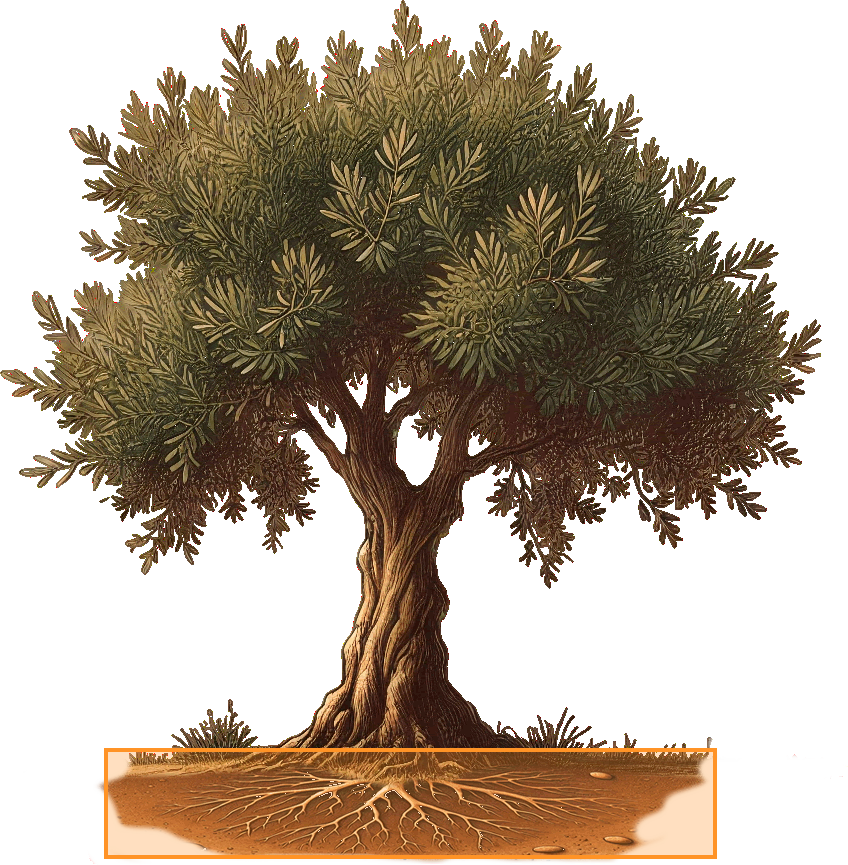
Primarily, when an olive tree has more foliage than roots, it ends up needing more nutrients and water than it can take in, which leads to various issues such as:
- Chlorosis, or yellowing of the leaves, due to the plant's water and nutrient deficiency.
- Increased vulnerability to water stress because it lacks the ability to retain enough water to sustain the plant. This can also affect the size of the fruit, resulting in much smaller produce.
- Loss of structure, since having few roots and many branches makes the tree more susceptible to damage from winds and heavy rains; it might even fall over.
Video on the two factors
For those interested in more details, I've also made a video version of the article that you can watch on my channel.
https://www.youtube.com/watch?v=ObxezYwo5x8&t=11s
Conclusion
As we've seen, pruning is a key strategy for cutting costs and boosting profitability in olive groves. Maintaining a proper balance between the leaf/wood ratio and the leaf/root ratio is crucial to maximize the tree's productive efficiency, ensuring healthy vegetative growth and increased yield.
By implementing these techniques in your olive grove, you'll optimize resources, improve the quality of your harvest, and cut down on future expenses for thinning and pruning tasks.
Keep enhancing your olive grove, and I'll see you in the next article!
Author: Ramsés Martínez Carrillo
February 10, 2025
Olive oil prices at the source
Buying and selling wholesale olive oil (in bulk and bottled)