

 English
 Español
 Italiano
 Français
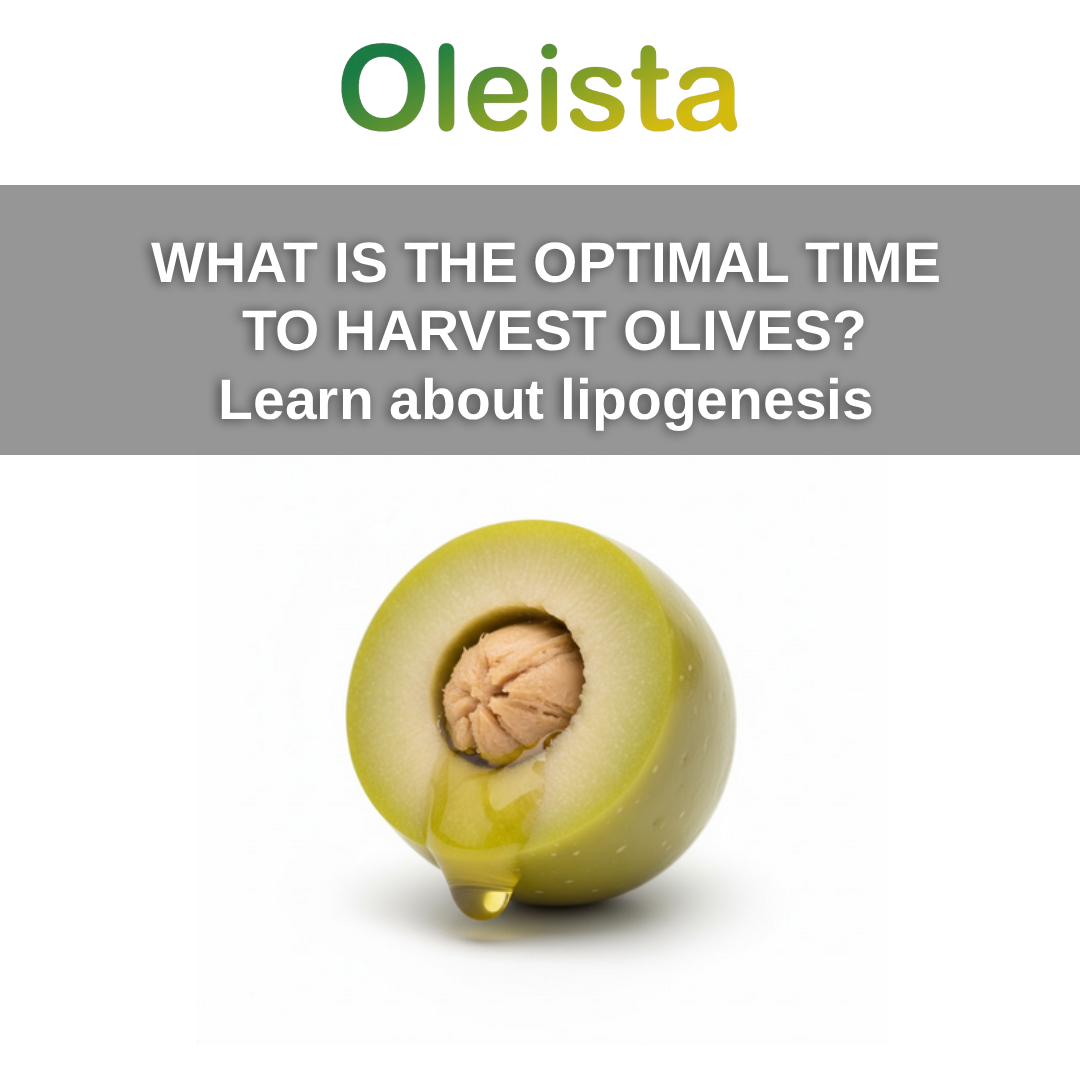
Lipogenesis in the Olive: The Oil Formation Stage
What is lipogenesis in the olive?
It may seem surprising, but olive oil begins to form long before it reaches the mill.
During a few critical weeks, the olive tree kicks its natural production into gear: lipogenesis, the physiological process by which the olive starts to accumulate its liquid gold within the flesh.
Understanding this stage is crucial if you aim to enhance the yield and quality of your oil.
Timeframe and Duration of Lipogenesis
Lipogenesis typically begins in late summer—between mid-August and early September—and lasts from 6 to 10 weeks. During this period, the fruit converts sugars produced by photosynthesis into fatty acids, mainly oleic, palmitic, and linoleic, which are stored as triglycerides.
This is, quite literally, the time when the olive tree "makes" the oil.
Ideal Conditions for Successful Fat Formation
However, for this production to operate smoothly, climate and crop management are crucial:
- Optimal temperatures range from 20 to 30 °C, with cooler nights.
- Controlled irrigation, avoiding both severe water stress and overwatering.
- Strong sunlight and healthy leaves to sustain photosynthesis.
- Balanced nutrition, particularly with potassium (K) and boron (B).
A failure in any of these factors can significantly decrease the oil percentage or alter its composition.
Picture an olive grove undergoing fat formation under optimal conditions:
olives brimming with oil, high in polyphenols, with balanced flavors and exceptional stability.
This results in more pounds of oil per acre and a higher quality, precisely what sets an outstanding producer apart from an average one.
Physiology of the Process
During lipogenesis:
- Sugars are converted into fatty acids that are stored in the mesocarp's vacuoles.
- The oil content increases and the pulp-to-pit ratio decreases.
- The fruit changes color from green to veraison (beginning to ripen).
- The dry weight of the fruit increases, indicating physiological ripening.
This natural process signifies the shift from vegetative growth to the productive maturation of the olive.

Picture of olives beginning the veraison process.
Impact on Harvest and Oil Quality
Understanding when lipogenesis starts and how it progresses allows you to determine the precise time for harvesting:
- Harvesting before it concludes (maturity index < 2) yields green oils of high quality.
- Waiting until the end of the process (maturity index > 5) increases yield but sacrifices freshness and antioxidants.
The balance lies in harvesting when lipogenesis stabilizes and the oil content peaks.
If you want to get the most out of your olive grove, keep a close eye on lipogenesis.
Conclusion
Monitor temperatures, manage irrigation, and analyze the fruit to fine-tune your farming decisions.
Once you know the perfect time to harvest your olives, it won't make sense if you sell your product poorly.
And that's where we come in.
If you want to present your batch to industry professionals who can appreciate your quality, you're in the right place → Oleista.
Feel free to check out our website for: