

 English
 Español
 Italiano
 Français
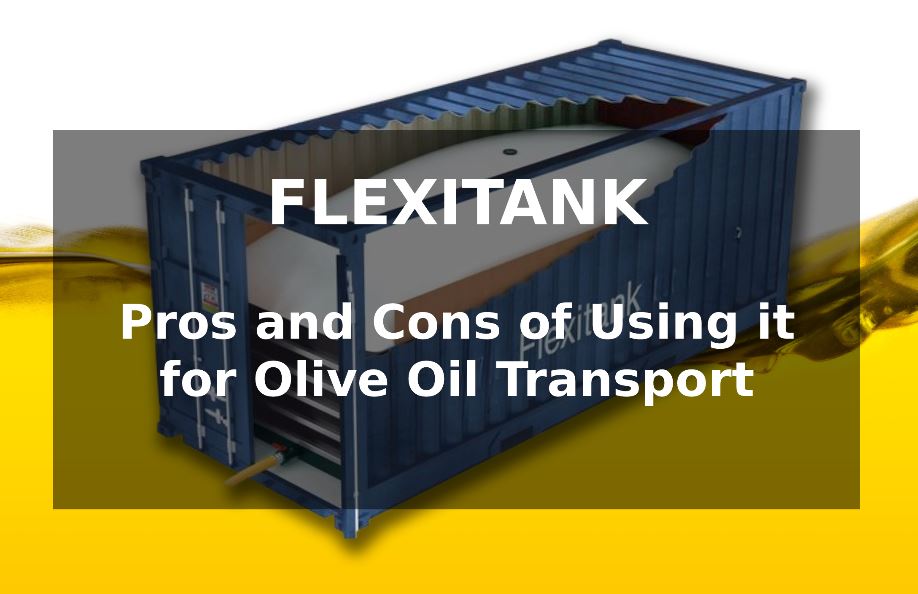
FLEXITANK: Pros and Cons of Using it for Olive Oil Transport
In a world where logistical efficiency and product quality preservation are crucial, the flexitank has become a strategic tool for shipping non-hazardous bulk liquids, such as olive oil. This system is revolutionizing the way oils are exported from producing countries like Spain, cutting costs, enhancing product freshness, and broadening international reach.

What is a Flexitank?
A flexitank is a large, flexible container made from food-grade polyethylene and polypropylene, which fits inside a standard 20-foot shipping container. It can carry between 16,000 and 24,000 liters of non-hazardous liquids, providing a modern alternative to traditional methods like drums, tanker trucks, or IBCs.
Advantages of Flexitanks in Olive Oil Transport
1. Reduced Logistic Costs
Flexitanks can transport up to 24,000 liters in a single trip, optimizing the usable volume of the container. By eliminating the weight of intermediate packaging (like drums), the cost per liter transported is reduced, and international shipping efficiency is maximized.
2. Quality Preservation
Flexitanks designed for food use include anti-oxygen barriers that minimize air and light entry, two factors that speed up oil oxidation and rancidity. This helps maintain the oil's organoleptic properties over long distances.
3. Extended Commercial Shelf Life
Bulk transport and packaging at the destination delay the start of the product's shelf life. This is particularly beneficial for markets with slow turnover or where oil is bottled under private labels.
4. Efficient Loading and Unloading
Flexitanks are equipped with high-flow discharge valves (3-inch Camlock type), allowing for quick, hygienic operations with minimal staff.
5. Sustainability and Recyclability
Though single-use, the materials of the flexitank are recyclable. Also, eliminating the transport of returnable packaging reduces emissions related to reverse logistics.
Disadvantages and Considerations
1. Risk of Breakage or Leaks
Poor quality flexitanks or incorrect installation can lead to leaks, resulting in not only financial loss but also environmental risk. Therefore, it's essential to use certified suppliers and specialized technical personnel for installation.
2. Container Pre-preparation
Before installing a flexitank, the container must be clean, dry, and free of damage. Additionally, reinforcements are commonly added to doors and walls to prevent punctures.
3. Single Load per Flexitank
Since they are single-use, flexitanks can't be reused or split for different loads. This requires well-planned logistics.
Does the Flexitank Affect Olive Oil Contamination?
The risk of contamination depends on the quality of the flexitank material:
- If a certified food-grade flexitank made with multi-layer virgin polyethylene without industrial residues is used, there is no risk of MOSH or MOAH contamination.
- If low-quality flexitanks with uncontrolled recycled materials or no certification are used, there is a risk of hydrocarbon migration into the oil, especially at high transport temperatures.
The flexitank itself is not a contaminant. However, correct selection and installation are crucial to avoid risks.
Always use certified food-grade flexitanks, free from components that could release hydrocarbons into the product.
Specific Applications in the Olive Oil Industry
Leading olive oil exporters are increasingly using flexitanks to reach markets in Asia, America, and the Middle East, where:
- Oils are packaged at the destination to reduce costs.
- They are labeled under local brands for better market acceptance.
- Quality deterioration from prolonged bottle storage is avoided.
Conclusion
The flexitank is an efficient, cost-effective, and safe logistical solution for bulk olive oil transport. It offers multiple technical, economic, and environmental advantages over traditional methods, provided it is used with quality and professionalism. Correct selection and handling prevent contamination risks, even in a context of growing concerns about MOSH and MOAH in food.